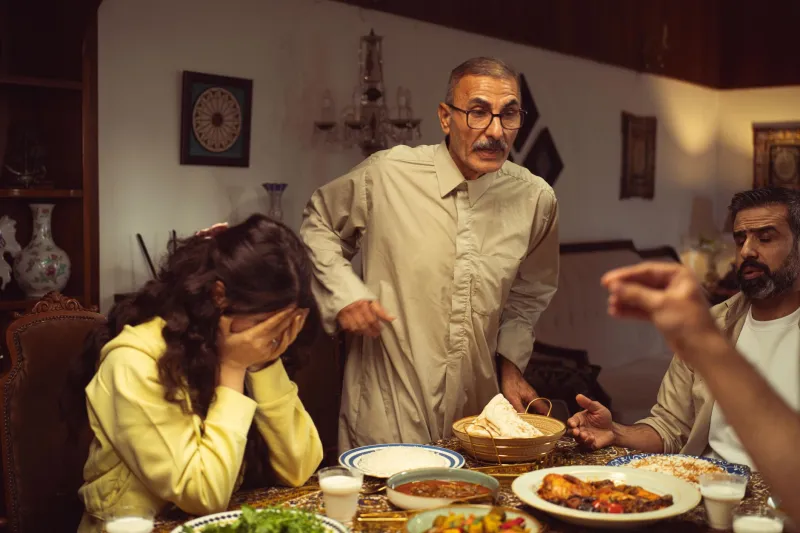
When the Tape Stops Rolling and the Real Conversation Begins
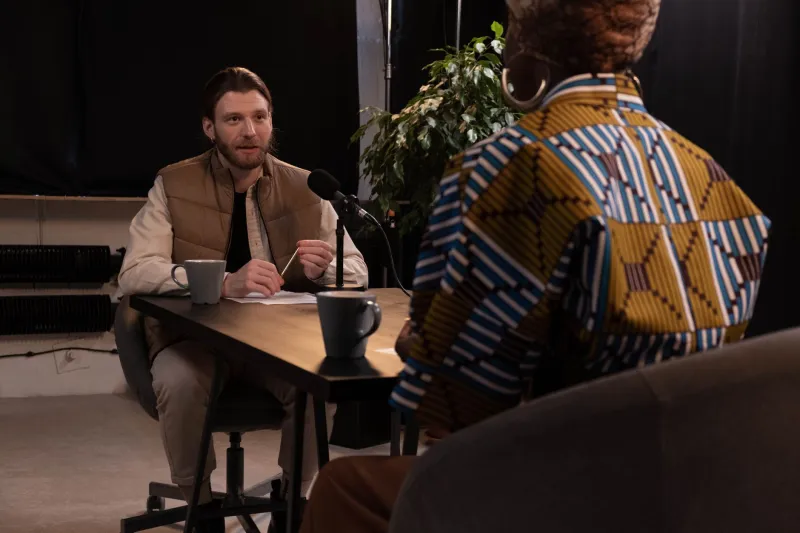
There's a ritual to it. The host wraps the outro, the producer signals that the recording has stopped, and everyone in the room — or on the Zoom call, or in the makeshift closet studio lined with moving blankets — exhales. The guest thanks the host. The host thanks the guest. Someone mentions they'll send over the release date. Then everybody logs off and goes back to their actual lives.
That's how it goes. That's almost always how it goes.
Except when it doesn't.
The Follow-Up Nobody Planned For
Ask any podcast host who's been doing this long enough and they'll remember at least one. The guest who sent an email two days later — not to ask about the air date or request a specific clip for their Instagram, but just to keep talking. The person who called back, unprompted, to say hey, I've been thinking about what you said. The interview that quietly turned into a correspondence, then a friendship, then something neither party had a clean word for.
These moments are rare enough to be notable. In an industry that runs almost entirely on transactional logic — you have an audience, I have a book to sell, let's make this work for both of us — genuine continuation is the exception, not the model. Most media appearances are designed to be complete. A beginning, a middle, an end. Move on to the next one.
So when someone breaks that pattern, it's worth asking why.
What Makes a Conversation Want to Continue
The easy answer is chemistry. Some people just click. But that's a little too convenient, and it doesn't explain the specific conditions that seem to produce these rare follow-throughs.
What hosts who've experienced this tend to describe is something closer to permission. Not the kind that's explicitly granted, but the kind that gets built slowly over the course of an interview when a host is genuinely curious rather than just professionally curious. There's a difference, and guests feel it almost immediately. One version is a host running through their prep notes, hitting the beats they planned, steering toward the moments that'll clip well. The other is a host who actually got surprised by something you said and wasn't afraid to let that show.
The second version is what makes people call back.
Because here's the thing — most people, even the ones with publicists and polished talking points and a media tour scheduled through the end of the quarter, don't actually get to say what they mean very often. They say the version of what they mean that fits the format. The version that's clean enough for a highlight reel. And somewhere in a long-form conversation, if the host creates enough space, the real version slips out. And that feels good. That feels like something worth returning to.
The Economy of One-Time Encounters
American media has a well-documented obsession with the new. New voices, new stories, new guests, new formats. The churn is relentless, and podcasting — despite its reputation for depth — is not immune to it. Booking culture rewards novelty. Algorithms reward freshness. The incentive structure basically guarantees that most conversations are engineered to be disposable.
Which is exactly why the guests who circle back stand out so sharply against that backdrop.
They're not operating on the industry's terms anymore. The promotional window has closed. There's no immediate upside to sending that follow-up email. They're doing it because the conversation meant something to them on a human level — because they felt heard, or challenged, or seen in a way that doesn't happen all that often when you're moving through the promotional machinery of modern media.
That's not a small thing. That's actually a pretty significant thing.
What Hosts Learn From the Guests Who Stay
There's a pedagogical dimension to this that doesn't get discussed enough. When a guest returns — not as a scheduled re-appearance, but organically, because they wanted to — they tend to bring the parts of themselves that didn't make the final cut the first time. The unguarded stuff. The follow-up thought they had at 2 a.m. three days after recording. The thing they almost said but pulled back from.
For hosts who are paying attention, this is gold. Not necessarily for content — though sometimes it becomes that — but for understanding what a conversation can actually do when it's given room to breathe past its original container.
Some of the most interesting podcasting happening right now is built on exactly this principle. Multi-part conversations, returning guests, hosts who treat their interview subjects less like resources to extract from and more like people worth knowing over time. It's a slower model. It doesn't optimize for volume. But it produces something the fast version can't: actual relationship.
Hunger in the Age of Disposable Content
Maybe what the call-back guest is really revealing is something about the rest of us, too.
We live in a media environment that is almost aggressively complete. Every piece of content is packaged to feel finished. Every episode ends with a tidy outro. Every story gets resolved or at least wrapped. There's very little cultural infrastructure for the and then what happened — for the messy, ongoing, unresolvable nature of real human connection.
So when someone breaks that seal — when a guest decides the conversation isn't actually over — it points to a hunger that the format itself wasn't built to satisfy. The hunger for continuation. For a story that doesn't end when the recording does. For the kind of relationship that doesn't have a promotional function and therefore doesn't have an expiration date.
That's what the best long-form audio has always been reaching for, even when it couldn't quite articulate it. Not just a good episode. A genuine encounter between people who are actually present with each other — and who maybe, if the conditions are right, find they're not quite ready to say goodbye when the mic cuts out.
The guest who calls back isn't an anomaly. They're the goal.
We just forgot to say that out loud.