Half-Baked and Left to Cool: The Art of Abandoning Every Conversation That Actually Matters
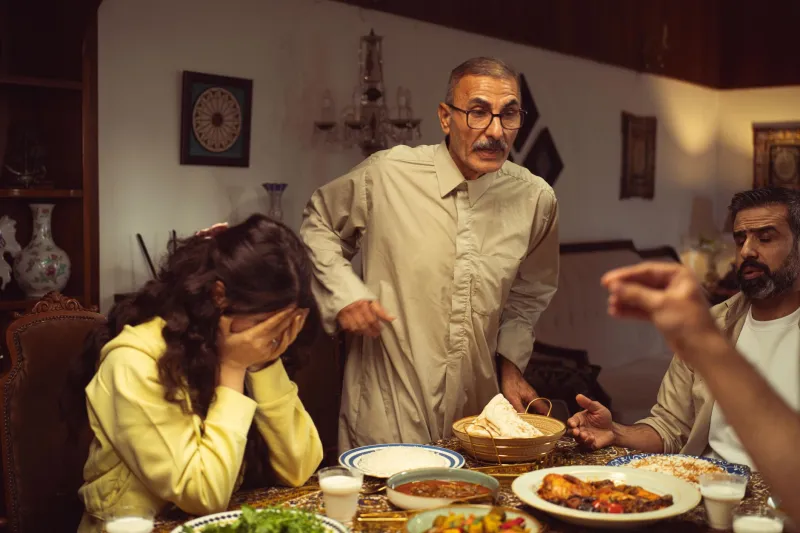
The Moment Right Before It Gets Real
You know the moment. Someone at the dinner table says something that lands a little heavier than expected. Maybe it's about money, or a family decision nobody's fully processed, or something they saw in the news that's been sitting on their chest all week. The room shifts. Forks slow down. And for just a second, it feels like something real might actually happen.
Then somebody's phone buzzes. Or someone makes a joke. Or the moment just... passes. And everyone lets it.
We've gotten weirdly skilled at initiating conversations we have no intention of finishing. It happens at the dinner table, in group chats that go quiet after one person actually opens up, on video calls where someone says "we should really talk about this" and then the meeting ends. We treat meaningful discussions the way we treat browser tabs — opened with full intention, never actually read, quietly closed when the moment gets inconvenient.
Why We Start What We Can't Finish
Here's the thing: starting a hard conversation feels good. It signals to ourselves and to the people around us that we're the kind of person who doesn't shy away from the real stuff. There's a small social reward in being the one who brings something up. What there isn't, unfortunately, is an equally satisfying reward for actually sitting in that discomfort long enough to get somewhere.
Psychologists have a term for this — emotional avoidance — but it doesn't quite capture the particular modern flavor of what's happening. This isn't just avoidance. It's performative engagement. We show up to the conversation, make our presence known, and then slip out the back before it gets genuinely uncomfortable.
Part of that is just how brains work. The prefrontal cortex, which handles long-term reasoning and the ability to tolerate ambiguity, is in constant competition with the parts of us that want resolution right now or, failing that, no resolution at all. Sitting in the middle — in the messy, unresolved space where real conversations actually live — is neurologically exhausting. And in a culture that's optimized everything else for efficiency and speed, we've quietly decided that emotional labor should be no different.
The Group Chat Graveyard
If you want to see this pattern in its purest form, look at your phone. Specifically, look at the group chat that went silent after someone shared something vulnerable. Or the thread that was going somewhere honest until the memes started up again. Or the one where someone typed out a long, real message and got back a string of heart emojis and then nothing.
Group chats are fascinating because they create the illusion of a shared space without any of the actual accountability that comes with being in a room together. You can read a message, feel the weight of it, and choose not to respond — and nobody technically knows you were even there. The "read receipt" is the closest thing we have to eye contact in that space, and most people turn it off.
This isn't a generational thing, by the way. It cuts across age groups. Boomers abandon hard conversations by changing the subject. Gen X does it by being ironically detached. Millennials say "we should talk about this more" and schedule a call that never happens. Gen Z sends a reaction emoji and leaves the chat. Different execution, same outcome.
What We're Actually Losing
There's a real cost here, and it's not just abstract. When we consistently leave conversations at the halfway point, we train ourselves — and the people around us — to expect that nothing will ever really be resolved. We start to believe, somewhere below the conscious level, that the hard stuff isn't actually discussable. That it's safer to gesture at it than to go all the way in.
Over time, that belief reshapes relationships. It's why so many people describe feeling close to someone but also strangely unknown by them. You've talked around the important things so many times that you've accidentally built a friendship, or a marriage, or a family dynamic, entirely out of the space between the real conversations.
It also affects how we engage with ideas more broadly. If you never push a difficult discussion to its natural conclusion, you never actually find out what you think. You stay in a permanent state of half-formed opinion, which is comfortable but not particularly useful.
The Discomfort Is the Point
Here's what nobody tells you about conversations that go somewhere real: they're supposed to feel uncomfortable. Not cruel, not destabilizing — just uncomfortable. That friction is actually the thing doing the work. It's where perspective shifts happen, where understanding gets built, where you find out that someone you thought you knew has an entirely different interior life than you assumed.
The problem is we've started treating discomfort as a signal to stop, when it's actually a signal that you're getting close to something worth saying.
Good interviewers know this. The best long-form podcast conversations — the ones that actually stay with you — are the ones where the host doesn't rescue the guest from a difficult pause. Where the follow-up question goes deeper instead of pivoting to something safer. There's a reason those conversations feel so rare and so valuable: because they model something we've mostly forgotten how to do ourselves.
Finishing What You Start
So what does it actually look like to stay in the room?
It looks like saying "I want to come back to what you just said" instead of letting the moment dissolve. It looks like texting someone back even when you don't have a perfect response. It looks like sitting with an unanswered question long enough to realize you don't actually need to answer it — you just need to stay present with it.
It also looks like acknowledging, out loud, when a conversation got abandoned. "Hey, we started talking about that thing last week and never finished" is one of the more underrated sentences in the English language. It tells the other person that you noticed, that it mattered, and that you're willing to try again.
None of this is easy. But the conversations that actually change things — the ones that shift how you see someone, or how you see yourself — they don't happen in the first five minutes. They happen in the uncomfortable middle, the part most people never reach because they've already closed the tab.
The door's still open. It's been open this whole time. The question is whether you're willing to actually walk through it.