Flip the Script: The Surprisingly Magnetic Power of Changing Your Mind in Public
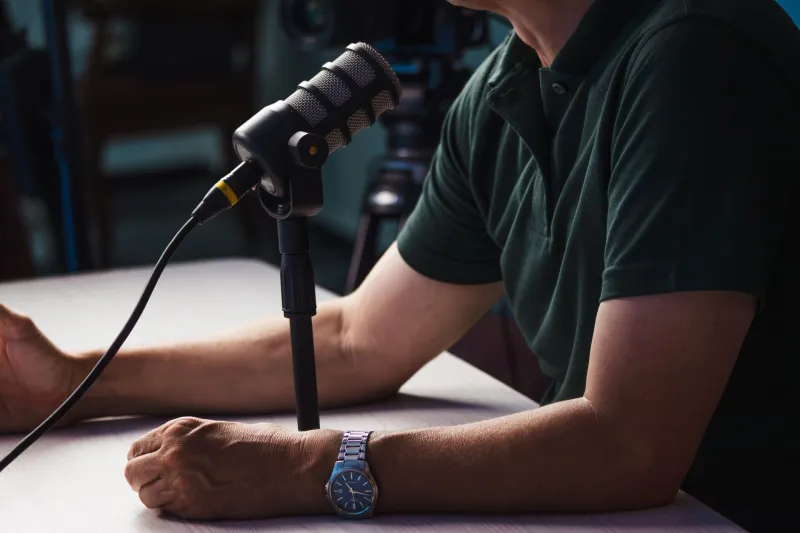
There's a moment that happens in the best long-form conversations — the kind we live for here at Untenrumpo — where you can almost hear the gears shift. Someone's been making their case, holding their position, defending the version of themselves they walked in with. And then something cracks open. A question lands differently. A story hits a nerve. And right there, mid-sentence, mid-thought, they go: Actually, I'm not sure I believe that anymore.
It's electric every single time.
We don't talk enough about how rare that is, or how much it takes to do it. In a culture that rewards consistency and punishes contradiction, changing your mind out loud feels almost radical. It shouldn't. But it does.
Why We Learned to Double Down
Part of this is just how the media environment trained us. For a long time, the people who got the most airtime were the ones who never wavered. Pundits, politicians, executives — they all learned the same survival rule: if you change your position, you hand ammunition to your critics. So they don't. They double down, reframe, spin. They find a new way to say the same old thing and call it nuance.
Social media made this worse. Every opinion you've ever posted is archived, searchable, ready to be screenshotted and thrown back at you the moment you try to grow. The incentive structure is basically designed to calcify people. You pick a lane, you stay in it, you build an audience around it. Changing your mind means risking that audience. And most people aren't willing to take that bet.
But here's what that calcification costs us: authenticity. Connection. The kind of conversation that actually moves something inside you.
The Psychology of the Pivot
Researchers who study persuasion and identity have a term for the discomfort that comes with updating your beliefs: cognitive dissonance. When new information conflicts with something we already believe, the brain experiences real psychological tension. And the easiest way to resolve that tension isn't to update the belief — it's to dismiss the new information.
That's the default. That's what most people do, most of the time.
But the people who resist that reflex — who sit in the discomfort long enough to actually process it — tend to come out the other side with something more valuable than a defended position. They come out with a more honest relationship with their own thinking. And when that happens on a podcast, in front of an audience, in real time? People feel it. They lean in.
There's something almost primal about watching someone recalibrate. It signals safety. It says: this person is actually here, actually listening, actually willing to be changed by what's happening in this room. That's not weakness. That's presence.
When It's Real vs. When It's a Move
Here's the catch, though. Not every public mind-change is genuine, and audiences are getting better at telling the difference.
There's a version of performed vulnerability that's become its own kind of brand strategy. You've seen it. The carefully timed confession. The "I used to think X, but I've grown" narrative that shows up in a book tour or a comeback interview. It hits the right notes, checks the right boxes, and lands with all the emotional resonance of a press release.
Real recalibration doesn't look like that. It's messier. It's slower. It often comes with visible discomfort — a pause, a laugh that's half nervous, a sentence that trails off because the person genuinely doesn't know where it's going yet. That's what makes it compelling. The uncertainty isn't performed. It's just there.
The guests who've had the most memorable moments in long-form conversations aren't the ones who came in with a polished arc. They're the ones who came in with a position and left with a question. Those are the episodes people talk about for months.
Everyday People, Real Breakthroughs
This isn't just a celebrity phenomenon. Spend enough time talking to regular people — the kind of people who show up in oral history projects, community podcasts, neighborhood storytelling nights — and you'll find the same pattern playing out at a smaller scale.
A guy in his fifties who spent decades certain that his estranged brother was entirely to blame, and then sat down for a recorded conversation with a mutual friend and heard something that reordered his whole understanding of what happened. A woman who built her entire identity around a particular political belief, and then, in the middle of a long drive and a podcast interview she'd agreed to almost by accident, started answering questions she'd never actually answered honestly before.
These aren't dramatic pivot moments. They're quiet ones. But the people who've lived them describe them the same way: like something loosened. Like they'd been carrying something heavy and finally put it down.
And the people who witnessed those conversations — the interviewers, the listeners, the friends in the room — describe something similar. A feeling of being let in. Of having seen something true.
What It Takes to Actually Do It
So why don't more people change their minds out loud? Beyond the social and professional risks, there's a simpler answer: it's hard. It requires you to hold two things at once — the version of yourself that believed something, and the version that's beginning to believe something else. That's disorienting. It can feel like losing ground even when it's actually gaining it.
The people who do it well tend to share a few things. They've developed a certain comfort with not knowing. They've learned to distinguish between their identity and their opinions — to understand that updating a belief doesn't mean abandoning a self. And they've usually had at least one experience where changing their mind publicly went better than they expected. Where instead of being mocked or dismissed, they were met with respect.
That first experience matters. It rewires something.
The Conversation That Earns It
For any of this to happen, the conversation has to earn it. A guest doesn't change their mind in a hostile environment. They don't get vulnerable with an interviewer who's waiting to pounce. Real recalibration requires the kind of slow, patient, genuinely curious dialogue that doesn't always make for punchy clips or quick hits.
That's kind of the whole point of what we do here. Long-form isn't just a format choice. It's a commitment to giving conversations enough room to actually go somewhere. To letting the silence sit. To asking the follow-up question even when the obvious move is to move on.
Because sometimes the most interesting thing a person can say isn't the thing they came in prepared to say. It's the thing they discover they believe while they're saying something else entirely.
That's the comeback nobody plans for. And it's always the one worth listening to.