Scripted to Death: What Over-Prepared Podcast Guests Are Actually Hiding
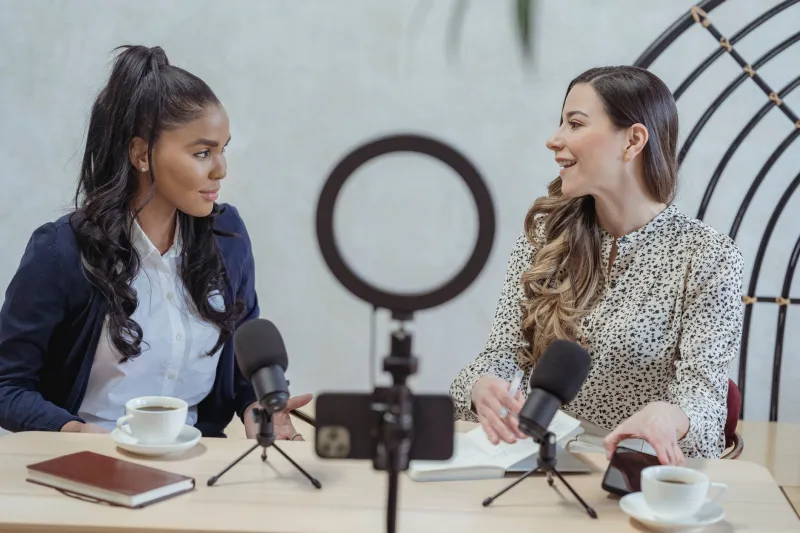
There's a specific kind of disappointment that podcast hosts know well. You've booked a guest you've been chasing for months. Their publicist sends over a one-sheeter, a list of approved talking points, and a gentle reminder of which topics are off-limits. You do your research, you prep your questions, and then the day comes — and the person sitting across from you sounds like a press release wearing a human face.
Polished. Competent. Completely unreachable.
This is the paradox nobody in the podcasting world loves to talk about: the guest who prepared so hard they forgot to show up.
The Rise of the Pre-Packaged Guest
Media training isn't new. Politicians, executives, and celebrities have been coached on message discipline for decades. But as podcasting exploded into a legitimate cultural force — one where a single episode can reach millions and shape public perception overnight — the industry around guest preparation grew with it.
Now there are entire agencies dedicated to getting clients "podcast ready." Coaches who run mock interviews for hours, drilling guests on how to redirect uncomfortable questions, how to pivot back to their core message, how to pause thoughtfully before answering so they appear reflective rather than reactive. The goal, as it's usually sold, is confidence. What it often produces is something closer to a performance.
"I can usually tell within the first ten minutes," says one long-form interview host who's been running her show out of Austin for six years and asked not to be named because she still books through some of the same PR channels. "There's a rhythm to a coached guest. They finish your sentence before you do. They have a story for everything, and every story has a clean little bow on it. Nothing ever went sideways. Nobody ever said the wrong thing. It's exhausting to listen to."
When Talking Points Become Walls
Here's the thing about a talking point: it's designed to end a conversation, not open one. It's a pre-loaded answer to a question that might not have even been asked yet. And when a guest arrives armed with six of them, the interview stops being a dialogue and starts being a series of ambushes — the host asking one thing, the guest smoothly delivering something adjacent.
What gets lost in that exchange is the texture. The hesitation before a hard answer. The moment where someone says "honestly, I don't know" and means it. The laugh that comes out wrong because the memory is still a little raw. Those are the moments that make a listener feel less alone — not because they've learned something new, but because they've recognized something true.
Coaches who work with podcast guests will often defend the process, and fairly so. Preparation isn't inherently the enemy. Knowing your own story well enough to tell it clearly is a skill worth developing. But there's a meaningful difference between preparation that sharpens and preparation that seals.
"I tell my clients: know your anchors, not your script," says one communications consultant based in New York who works primarily with authors and startup founders. "An anchor is a theme you can return to naturally. A script is something you recite. The moment you're reciting, you're gone. The listener can feel it even if they can't name it."
The Unexpected Tangent Is the Whole Point
Some of the most memorable podcast moments in recent years weren't planned. They happened because a host asked a follow-up question nobody expected, or because a guest went somewhere slightly off-script and the host had the sense not to redirect them. That's where the real stuff lives — in the detour.
The problem is that detours terrify over-prepared guests. They've been trained to see an unexpected question as a threat rather than an invitation. So they handle it the way they've been taught: bridge back, redirect, stay on message. And the moment passes.
One podcast producer who's worked on shows with audiences in the millions described watching a guest physically tense up when a host went off the pre-approved question list. "You could see it happen in real time. They smiled, they pivoted, they were perfectly professional. And the episode was completely forgettable. There was nothing in it that you couldn't have read in their press kit."
Contrast that with a guest who comes in with less armor. Someone who's thought about what they want to say but hasn't rehearsed every syllable. When they get an unexpected question, they actually have to think. And that thinking — that visible, audible process of a person working something out in real time — is magnetic in a way that no amount of media training can manufacture.
The Authenticity Arms Race
There's an irony buried in all of this. The podcasting format became dominant partly because it felt raw compared to traditional media. No teleprompters, no segment producers whispering in earpieces, no hard commercial breaks forcing artificial conclusions. It was supposed to be the place where people actually talked.
But as the stakes got higher and the audiences got bigger, guests started treating podcast appearances like any other media opportunity — something to be managed and controlled. And so the format that was supposed to cut through the noise started generating its own version of it.
Listeners aren't stupid. They've absorbed enough long-form audio at this point to know the difference between someone who's present and someone who's executing. The metrics bear this out: episodes where something genuinely unscripted happens — a guest gets emotional, an argument breaks out, someone says something they clearly weren't planning to say — tend to generate more conversation, more sharing, more of the engagement that actually matters.
What Good Preparation Actually Looks Like
None of this is an argument for showing up unprepared. There's nothing charming about a guest who hasn't thought about their own story, who rambles without direction, who can't articulate why they're sitting in that chair in the first place. That's a different kind of failure.
The sweet spot — and it's genuinely hard to find — is a guest who knows themselves well enough that they don't need a script. Who's done the internal work so thoroughly that any question becomes an entry point rather than a threat. Who trusts the conversation enough to follow it somewhere unplanned.
That kind of preparation doesn't come from a media trainer running mock interviews. It comes from actually sitting with your own story long enough to stop being afraid of it.
Which, when you think about it, is kind of the whole point of doing the interview in the first place.
The mic doesn't reward the most rehearsed version of you. It rewards the most honest one. And those are rarely the same thing.