Honesty Has a Price Tag — And Not Everyone Can Afford to Pay It
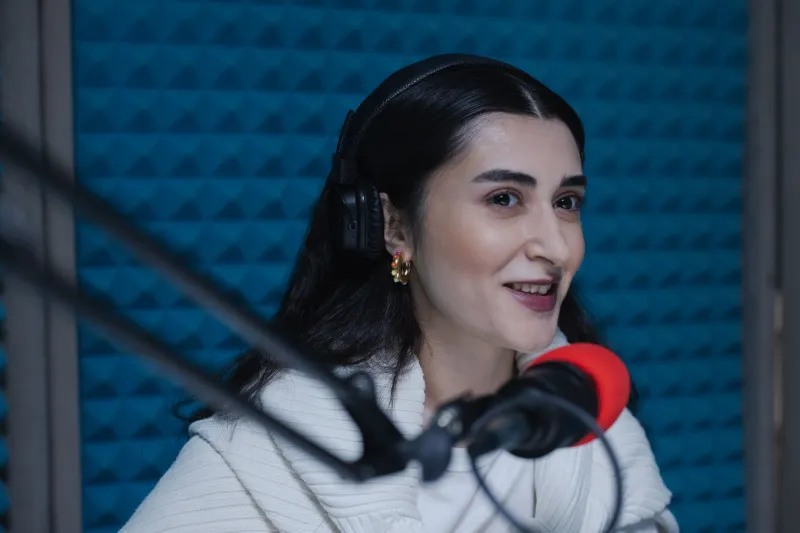
There's a moment in almost every long-form interview where you can feel it — the guest hovering at the edge of something real. They pause. They glance sideways, like they're checking whether the exit is still there. And then, sometimes, they jump.
Sometimes they don't.
The ones who jump? They often land hard.
We've spent a lot of time on this site talking about what happens when people hold back, when they show up to a conversation with their armor already on and their talking points already memorized. But there's a flip side to that conversation that doesn't get nearly enough attention: what happens to the people who actually go there — who say the thing they weren't supposed to say, name the person they weren't supposed to name, or admit the failure they'd been quietly burying for years.
Because the fallout is real. And it doesn't distribute evenly.
The Professional Cost of Saying What You Actually Think
Let's be direct about something the podcast industry tends to romanticize: authenticity is not free.
For a certain class of guest — the already-famous, the financially cushioned, the person whose brand is their unfiltered opinion — being candid on a mic carries relatively low risk. They've already built an audience around their willingness to say uncomfortable things. The controversy, for them, is often the point. It's good for the numbers.
But for everyone else? The math looks completely different.
Take the mid-level marketing manager who goes on a niche industry podcast and admits, honestly, that the company she left was running a quietly predatory sales operation. She doesn't name names. She doesn't go scorched-earth. She just tells the truth about what she saw. Within two weeks, she's gotten calls from former colleagues warning her that people are talking. A job offer she was expecting gets quietly withdrawn. A reference she'd been counting on goes cold.
Or the guy in his late thirties who goes on a mental health-adjacent podcast and talks openly about his struggles with addiction — something he'd worked through years ago, something he's genuinely proud of having survived. His episode gets picked up and shared more broadly than either of them expected. His employer hears about it. Nothing formal happens. But the promotions stop coming.
These stories don't make headlines. They're not dramatic enough. Nobody gets canceled in a way that trends on Twitter. It's quieter than that — a slow erosion, a series of doors that stop opening, a professional reputation that gets subtly recalibrated in ways that are hard to prove and nearly impossible to fight.
Who Gets to Be Honest?
Here's the uncomfortable question sitting underneath all of this: has authentic self-expression on public platforms become a class privilege?
Think about the guests who are most celebrated for their podcast candor. They tend to share certain characteristics. They have financial cushion. They have existing platforms. They have lawyers, sometimes. They have enough cultural capital that even a controversy tends to eventually resolve in their favor — or at least leaves them standing.
For people without those buffers, the calculus is entirely different. A first-generation professional with a mortgage and aging parents to support doesn't have the same margin for error as a venture-backed entrepreneur with a book deal already locked in. A person from a marginalized community who speaks honestly about systemic barriers faces a different level of scrutiny — and a different kind of backlash — than someone whose identity comes with built-in credibility and benefit of the doubt.
The podcast world loves to hold up vulnerability as a virtue. And in the abstract, it is. But virtue and safety are not the same thing. And we should probably stop pretending they are.
So Why Do People Still Do It?
And yet — people still jump. Knowing what it might cost them, some guests sit down across from a host, feel that edge approaching, and go ahead and step off it anyway.
Why?
The answers, when you actually talk to people who've been through it, are less heroic than you might expect. And more human.
Some of them are tired. Genuinely, bone-deep tired of carrying a version of events that doesn't match what actually happened. The podcast becomes the place where they finally get to put the real story down, even if only for an hour, even if there's a cost attached.
Some of them are angry. Not performatively — just quietly, persistently angry at a professional culture that rewards careful image management over actual honesty, and they've decided they're done playing along.
Some of them have already lost the thing they were afraid of losing. The job is gone. The relationship is over. The reputation took the hit. And without that thing to protect anymore, the conversation finally gets to be honest.
And some of them — this one is harder to articulate but it comes up more than you'd think — do it because they believe, or at least hope, that it might matter to someone listening. That someone else is out there carrying the same story they've been carrying, and hearing it said out loud might make that person feel less alone.
That's not nothing. That's actually kind of everything.
The Asymmetry We Don't Talk About
What the podcast industry — and honestly, the broader media conversation around authenticity — tends to skip over is the asymmetry baked into the whole enterprise.
The host walks away. The episode gets edited, packaged, and released on a schedule that works for the platform. The guest lives with whatever comes next.
The host's reputation, generally speaking, benefits from a guest who goes deep. More compelling episode. Better clips. Higher engagement. The host might check in afterward — the good ones do — but the professional fallout, if there is any, lands almost entirely on one side of the table.
That's worth sitting with. Especially for anyone who produces, hosts, or books guests for a living.
Encouraging someone to be vulnerable on your platform is not a neutral act. It carries weight. And the person doing the encouraging usually isn't the one who ends up carrying it.
The Longer Game
None of this means people shouldn't be honest on podcasts. Long-form audio exists precisely because it creates space for the kind of conversation that doesn't fit anywhere else — the messy, unresolved, genuinely complicated stuff that gets flattened everywhere else.
But honesty without context is just exposure. And exposure without protection is just risk.
The conversations worth having — the ones that actually move something in the people listening — tend to come from guests who've made a real, eyes-open decision to go there. Not because someone prodded them into it, not because the host kept pushing until the wall came down, but because they decided, for their own reasons, that the truth was worth more than the protection.
That decision belongs to them. Not to the platform. Not to the audience.
And the least we can do — as listeners, as hosts, as people who consume other people's honesty like it's a resource we're entitled to — is recognize what it actually costs.